
If your business is dealing with a power outage after a storm and you’ve had to shut down, the first question is usually whether insurance will cover the lost income or damaged inventory. The answer depends on how—and where—the outage happened.
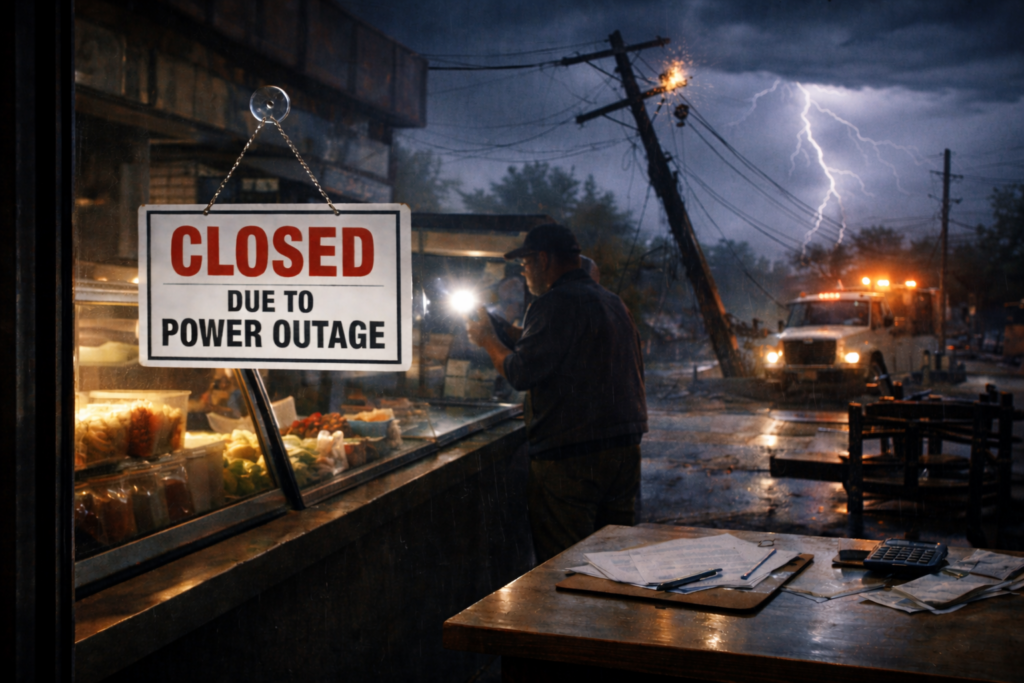
Storm-related outages often knock out power across entire areas, not just your building. That distinction matters. Many business income policies require direct physical damage at your property to trigger coverage. If your building is fine but the grid is down, coverage may not apply unless you’ve added a utility services endorsement.
This is where a lot of businesses get caught off guard. You can have spoiled food, idle employees, and days of lost revenue—but without the right endorsement, those losses may not be covered. This is one of the more common gaps we see.
Spoilage coverage is another area to review. Some policies include it, but limits may be lower than expected, or tied to specific causes of loss. If refrigeration failed due to an off-premises outage, that detail can determine whether a claim is paid.
From a policy standpoint, there are a few things worth reviewing:
- Whether your business income coverage requires on-premises damage
- If you have a utility services endorsement for off-site power failure
- Spoilage coverage limits and what triggers them
Operationally, what you do during and right after the outage matters. Document everything—take photos of spoiled inventory, track how long power was out, and keep records of canceled jobs or lost sales. This is where small issues turn into bigger problems if documentation is missing.
It’s also worth looking at prevention. Backup generators, even partial ones, can protect key equipment like refrigeration or servers. Carriers often expect businesses with high dependency on power—like restaurants or grocery stores—to have some level of contingency planning in place.
There’s also a difference between preventing loss and insuring it. Insurance is there for covered events, but it won’t replace every dollar lost in an outage—especially if the cause falls outside your policy terms. Prevention steps like backup power and response planning can reduce how much you’re relying on coverage in the first place.
If your business depends on electricity to operate, this is the time to review how your policy handles outages—before the next shutdown forces the issue.